
Since I still had sunflower seed in the planter boxes I added some grain sorghum, corn, soybeans, and some more sunflower seed that was in the left over seed pile in the shop. All of this was seed that had been cleaned out of the planter so the cost of the seed was already paid for by the full season crop. This was planted on wheat stubble that was fallow until grain sorghum is planted next June, the seed was left over, part of the field was fertilized got the fertilizer that was left in the planter, so the only real expense was my time and wear and tear on the planter.
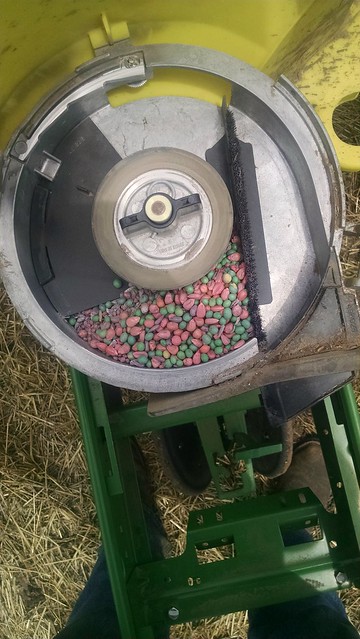
The seed mix I planted. It's a mix of corn, soybeans, sunflowers, and grain sorghum. This is some seed that had been cleaned out of the planter the last couple of years.
I started with a seed population of 30,000 and decided to bump that to 40,000, for two reasons a, to see what it would do and b, I was getting tired of sitting in the tractor. I picked 30,000 because that is high for sunflowers, low for grain sorghum, high for corn, and extremely low for soybeans. I used the sunflower seed meter disk since they were the closest to medium size and played with the vacuum until I was satisfied with the seeding rate. I wasn't overly concerned with seeding accuracy due to the purpose of this crop.
I seeded this on July, 30th in a normal year nothing should have made it to full maturity. With the mild fall and late killing freeze the sunflowers did, but didn't retain seed and some shorter season corn did might of made it to physiological maturity. Both the sorghum and corn should have been high nutrient level in the plant at the time of a killing frost.
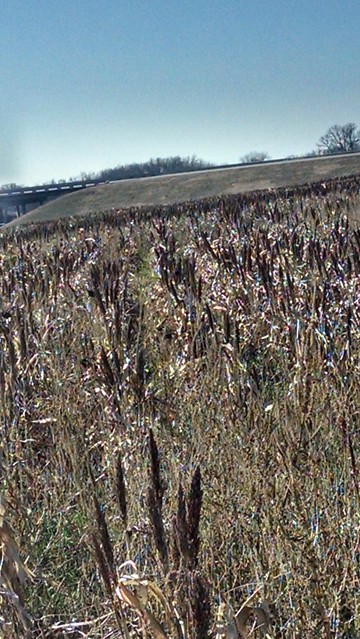
Looking down the row, I ended up with more grain sorghum in the mix that I had originally planned. I didn't put any more bags in, but at about 15,000 seeds per pound when compared to the other seeds it makes sense.
I was surprised at the amount of volunteer wheat growing in it between the rows. Having it growing will extend the time that a root is actively growing. I feel root activity adds considerably to to soil health.
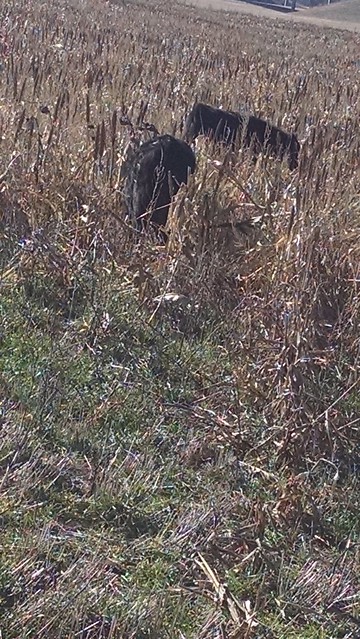
Some calves grazing it. Those are sunflowers to the left of the calf in the foreground.
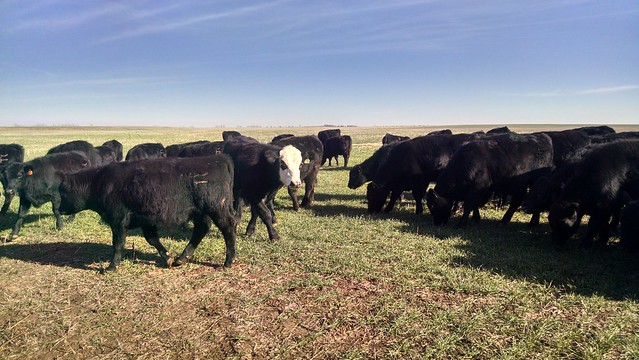
To simplify the fencing I including part of the adjoining wheat field. Typically we don't pasture wheat, but it is an accepted practice for the area. The calves will be of before the wheat gets to the jointing stage this spring so there will be no permanent harm to the wheat.
I don't have access to scales to measure growth so I will track the amount of hay I feed compared to what I would have fed in a drylot. Normally we feed medium quality brome, priced at about $45 a bale.
In future years I will add a few turnips or radishes and Austrian winter peas. I think this will be an inexpensive way to add even more diversity. The turnips or radishes will have deep roots along with the sunflowers and will absorb nutrients and the peas will convert atmospheric nitrogen to usable nitrogen in the plant that will go into the soil after it decomposes. The peas might over winter, I haven't found a definitive answer, but even if they do it should be simple to kill out in the spring when I do spring burn down for the volunteer wheat.


