Showing posts with label ag in the middle. Show all posts

Friday, October 12, 2018

First year cover crop experience

Way back in September 2017 we tried some cover crops on fields that were scheduled to be planted to either corn or grain sorghum. On some fields we planted a blend of rye, triticale, winter barley, turnips, radishes and a rapeseed with intentions of grazing cattle on it in the fall. We also had some fields with rye. Normally grain sorghum is planted in early June in fields that had wheat harvested off of them the end of the previous June. We try to rotate sunflowers through between wheat and corn/grain sorghum every 8 years so.

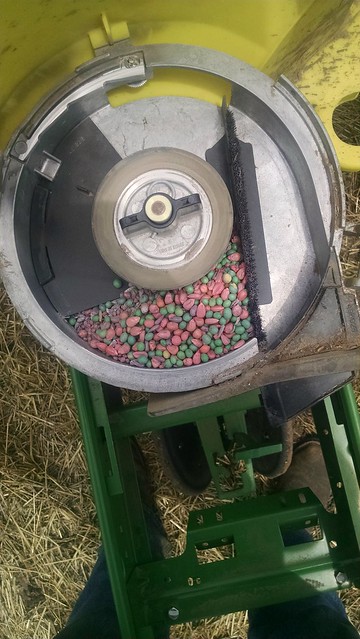
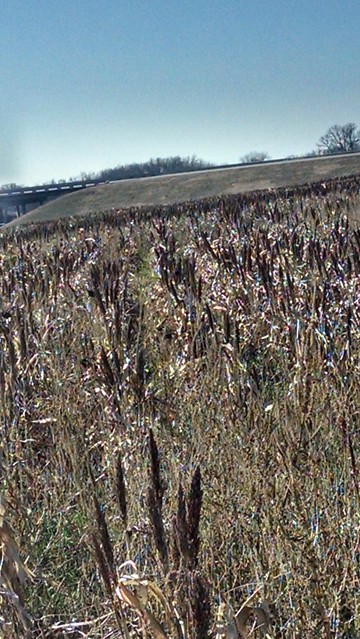
This field was the grazing blend that wasn’t grazed due to dry weather the prevented proper fall growth. I had switched from a yellow variety to a red sorghum variety. The weed control has been very good here. The rain and weather aligned with sorghum needs very well and it’s tough crop that is still suited for poor hill ground compared to corn.


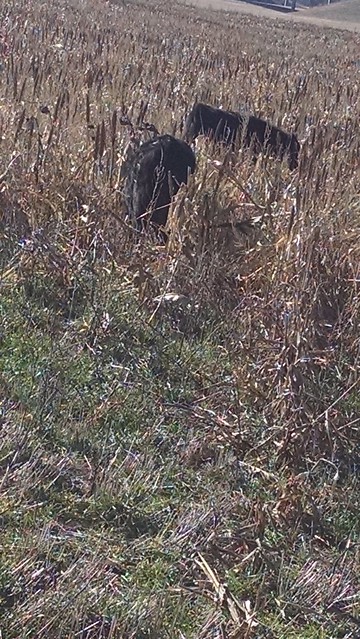
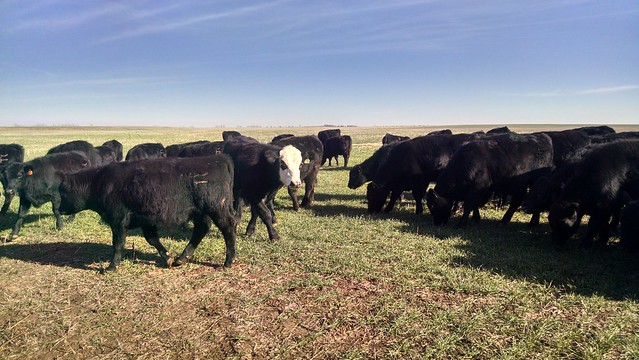
We had the same grazing blend here that was grazed. It was only grazed for about 3 weeks because it was dry and didn’t grow as expected. I also planted the covers about a notch shallower than I normally plant wheat I didn’t want to bury the radishes and turnips. I think I would have been better at the deeper seed depth. We have a little more weed pressure, not bad and the favorable weather we can grow good sorghum and weeds.


For comparison this sorghum was planted into wheat stubble that had double crop sunflowers last year, the sunflowers had done very good last year. We like the sunflowers as a double crop for many reasons. We can plant them as late as July 20th and make a crop, they are harvested high off the ground so our wheat stubble remains in tact on the field. Finally the tap root goes deep in the soil and extracts nutrients other crops can’t reach, the deep roots serve as a pathway for following crops to root deeper. It seems crops following for the next 3 or 4 years just do a little better. We have an irrigated field that has had a corn, soybean, wheat and double crop sunflower rotation for years. I’d love to have a soil pit on it some time, I imagine there is black streaks several feet deep  every few inches.

The corn is already harvested where we we have had cover crops. Very good weed suppression and it still has a nice mat of residue on the ground from both the wheat stubble and rye. The corn yields weren’t great due to hot dry weather at pollination. One field has been seeded back to wheat. The other field some of the corn was chopped for silage in early august and the rest was harvested for grain mid September. It has been seeded back to rye and planning to put soybeans on it next spring.

The cereals were sprayed out when they reached the boot stage so we shouldn’t have a problem with making seed and future plants becoming weeds. The plants were at max growth in regards to size and weren’t using nutrients and soil water to make seed yet.

We were a little leary of planting sorghum on the covers because there are little effective herbicide options for weed control after the crop starts growing and unsure of how well our normal pre plant residual herbicides would be with all the residue. We decided to use the pre plant due to thin places in the cover crops to prevent an explosion of weeds there. Corn is a better option because of better herbicide options even for non GMO varieties.

Here is a field planted to rye. It might get grazed later this fall if things work out for us to we used a basic stater fertilizer to help maintain the phosphorus level in the soil. There is another field, the dry land portion of the irrigatated corn, soybean, wheat, double crop sunflower field that has some rye on part of it. It will be interesting to see how and if soybeans respond to the rye cover crop. 

In the future I might experiment with winter legumes such as winter peas and chickling vertch on fields destined for corn or grain sorghum, I don’t think we will have the ground cover we have with cereal crops hindering soil water holding. A mix of them with cereal and turnips might work well. Another consideration is neighboring wheat fields, volunteer wheat can harbor mosaic and cause problems. If we know there is a will be a wheat field next to it, even across the road we plant later after controlling the volunteer wheat. Later planting limits the cover crop choices.




Wednesday, December 20, 2017

Erosion control

Many of our fields are on hills and have terraces to help prevent soil erosion from water runoff. The terraces are ridges that have been built in the field that to slow and redirect the water. The water moves to grass covered drainage ditches. It’s hard for me to explain but this past fall we had a very heavy rain event and I had the opportunity to take a group of pictures of terraces and waterways in use. This field had two years of wheat and is in currently in a rye cover crop so it was near maximum soil erosion protection. This part of this field might be rotated to corn for silage next year or soybeans due to more choices to control weeds after the crop starts growing.


Tuesday, December 22, 2015

Grazing cover crops

There has been quite a bit of discussion about cover crops and dual purpose cover/forage crops for the past few years. Some of the seed blends can get quite costly, I've seen quotes as high as $60 an acre for some seed mixes, this was the price of seed wheat during the height of the high grain price cycle.

Since I still had sunflower seed in the planter boxes  I added some grain sorghum, corn, soybeans, and some more sunflower seed that was in the left over seed pile in the shop. All of this was seed that had been cleaned out of the planter so the cost of the seed was already paid for by the full season crop. This was planted on wheat stubble that was fallow until grain sorghum is planted next June, the seed was left over, part of the field was fertilized got the fertilizer that was left in the planter, so the only real expense was my time and wear and tear on the planter.

2015-12-21_12-14-50
The seed mix I planted. It's a mix of corn, soybeans, sunflowers, and grain sorghum. This is some seed that had been cleaned out of the planter the last couple of years.

I started with a seed population of 30,000 and decided to bump that to 40,000, for two reasons a, to see what it would do and b, I was getting tired of sitting in the tractor. I picked 30,000 because that is high for sunflowers, low for grain sorghum, high for corn, and extremely low for soybeans. I used the sunflower seed meter disk since they were the closest to medium size and played with the vacuum until I was satisfied with the seeding rate. I wasn't overly concerned with seeding accuracy due to the purpose of this crop.

I seeded this on July, 30th in a normal year nothing should have made it to full maturity. With the mild fall and late killing freeze the sunflowers did, but didn't retain seed and some shorter season corn did might of made it to physiological maturity. Both the sorghum and corn should have been high nutrient level in the plant at the time of a killing frost.

2015-12-20_11-55-01
Looking down the row, I ended up with more grain sorghum in the mix that I had originally planned. I didn't put any more bags in, but at about 15,000 seeds per pound when compared to the other seeds it makes sense.

I was surprised at the amount of volunteer wheat growing in it between the rows. Having it growing will extend the time that a root is actively growing. I feel root activity adds considerably to to soil health.

2015-12-20_11-55-41
Some calves grazing it. Those are sunflowers to the left of the calf in the foreground.

2015-12-20_11-54-10
To simplify the fencing I including part of the adjoining wheat field. Typically we don't pasture wheat, but it is an accepted practice for the area. The calves will be of before the wheat gets to the jointing stage this spring so there will be no permanent harm to the wheat.

I don't have access to scales to measure growth so I will track the amount of hay I feed compared to what I would have fed in a drylot. Normally we feed medium quality brome, priced at about $45 a bale.

In future years I will add a few turnips or radishes and Austrian winter peas. I think this will be an inexpensive way to add even more diversity. The turnips or radishes will have deep roots along with the sunflowers and will absorb nutrients and the peas will convert atmospheric nitrogen to usable nitrogen in the plant that will go into the soil after it decomposes. The peas might over winter, I haven't found a definitive answer, but even if they do it should be simple to kill out in the spring when I do spring burn down for the volunteer wheat.

Saturday, December 11, 2010

Rural Decline

This morning I learned a high school classmate's dad passed away. Leo ranched and farmed and commonly combined resources with his brothers to build operations that would support their families. I went to school with his sons Darren, a classmate, and Dustin, a year ahead of me in school, both ranch in the area. These are some of the very few that I went to high school went that chose a career in production agriculture.

Thinking about them today, a problem that will soon effect rural America in the next few years became clearer. Many farmers and ranchers are approaching retirement age and many do not have another generation to take over.

For many decades we've told rural kids that there wasn't a future for them in rural America and they needed to go to college and move to the city. In fact we give college scholarships to the brightest to ship them out even faster. The kids took the rural work ethic with them and many have been successful. As a result our rural towns and communities are declining in both population and leadership.

Reversing the decline and increase opportunities in rural America will take input from many people with diverse areas of expertise. Rural development plans can not be a one size fits all and will need to be tailored to each location.

Sunday, September 26, 2010

New Markets??

As I look forward to the long hours and near madness of seeding wheat starting this week, I also think about how to market it. With much debate and interest in local/regional food the question I find myself asking is, "How can I take advantage of marketing it to bakeries and restaurants in Kansas City and Wichita as flour?"

Normally we sell all of it, except for a small portion that's kept for seed, as a commodity to either our local grain elevator, which in turns markets it to a multinational grain company, or we haul it directly to the multinational ourselves. Multinational companies offer many advantages such as a variety of forward contracts that allow us to capture potentially favorable prices and peace of mind of getting paid timely .

On the other hand a small flour mill offers the opportunity to market the grain as a finished product to bakeries, restaurants, and the public that want closer contact to the farmers that produced it. A small flour mill is another opportunity to add a few needed jobs in rural America, it won't provide enough jobs to stop the out migration though. The potential downside is a small mill could be slow paying and lack the economies of scale for longevity even when charging a premium price.

Shepard's Grain is an excellent example of a group of farmers in the Pacific Northwest working with an ADM flour mill to develop flour products to their specifications and then marketing the flour to bakeries, delis and other commercial wheat flour users. Using a cost plus pricing system creates a very transparent pricing scheme and rely on farmer owners to help with promotion allowing end users to meet the farmer owners. Mid-scale food value chains case study: Shepherd’s Grain gives a detailed look at how Shepard's Grain works.