Friday, January 17, 2020

Changes: A Last Kiss Goodbye

My wife of 26 years passed away on December 27,2019. Leaving me to raise three teenage kids, two of which are special needs on the autism spectrum. I wrote this on January 1,2020 the day after the service. At the time it was very therapeutic to write, but too painful to share until now.


A Last Kiss goodbye

Watching the slide show of my sweetheart that the lord called home last week. All I longed to do was give her a last kiss goodbye. 

I had a habit that sometimes drove her crazy, but I couldn’t leave the house without giving kissing her goodbye. If I got distracted or something I always had to kiss her again as I left. I always felt a goodbye kiss didn’t count unless one of us was in the process of leaving the house, the other kiss was just a bonus.

After she had passed when my family was standing at the door of the hospital debating on who was riding home with who I had to go back down the hall to the room where my Sandy’s body was in and give her one last kiss through the sheet covering her face.  Even though I had kissed goodbye a few minutes earlier through the sheet with the delay I was drawn back to her for a final kiss goodbye and to tell her once again that I loved her. I walked out to my brothers pickup and he drove me home where I started my expanded role of a parent and transferred many contacts and calendar from her phone to mine.

Against my wishes, but following her wishes she was cremated. I feel cheated from not being able to kiss her goodbye a final time. Even if it was just a kiss passed from my lips to my fingers to her lips.

Wednesday, October 17, 2018

Times past

I found this picture on Pinterest last summer while looking for pictures of similar model Frieghtliner semi trucks. Photographer is unknown.

     When I first found the photo and enlarged it to where G&G Trucking on the truck and G&G Hogs on the trailer were visible many memories came rushing back to me. G&G hogs was a local company that bought hogs at their headquarters along with buying them out of area livestock auctions/sale barns for slaughter.  While G&G trucking handled the transportation.
     My family like many other farms raised hogs on there family farm. Before my memory my parents had sows and raised pigs from birth to slaughter weight. When I was older they bought feeder pigs, 50 to 60 pound pigs to feed to market weight. 
     In the mid 70’s to the early 80’s it seemed like there was a pig on every open piece of land that we could find. We had hog lots by the shop, across the road from the shop, and at a couple of old farmsteads down the road.  In addition to dirt lots there was a hog barn across the road from the shop that could house about 300 head of hogs and we rented a another building next to town the would have held just as many. 
     Raising hogs on dirt is a pretty low cost endeavor. Dad and granddad had built shelters for them with a pipe frame that could be dragged around, some wire panels pens, electric fence, recycled lumber was used to build platforms for the water tanks and feeders.  Raising them inside did cost a little more due to the capital investment in the buildings. The building at home was completely open on the south side so it was a summer only feeding use. The building rented next to town was fully enclosed so it could be used year round.
     When the pigs first arrived for the dirt lots they were in pens with the wire panels and as they grew older they were introduced to electric fence and later their pens were expanded with electric fence. Feeding pigs outside usually resulted to slower weight gain, but was offset by the lower costs.  Pigs fed inside were kept in pens they were permanently assigned had a portion of the floor slatted so waste could run into a pit underneath and them applied on farmland, nipple waters, and  small feeders on the concrete floors that were supplied by bulk bins outside the buildings. 
     The local elevator mixed the feed to our specifications and delivered it to the the feeders for the outside pigs and the bulk bins for the inside pigs.  We supplied the grain sorghum for the energy portion of the feed, mineral vitamins  and and most likely soybean meal was added for protein.  We used grain sorghum because the feed value is 90+% of corn, but priced much lower so using it significantly added value to the crop raised on the farm.  The few times wheat prices were low enough justify feeding, feed rations were altered to included wheat. 
     Some pigs were sourced locally while others came from further west such as the Great Bend, Kansas area.  We built a good relationship with pig suppliers and even when markets were down we kept buying pigs from them knowing markets would turn around they would all make money again.  In those times weak livestock market generally were times of strong grain markets so it might be a wash at the end of the year.
     There were so many places that we marketed hogs at. I remember riding with dad to a buying station north of Clay Center, Kansas, a buying station is a place where farmers sold pigs directly to a packing company and they shipped semi loads to the packing plant.  On many Thursday’s  we had either the gooseneck livestock trailer or a grain truck loaded with market hogs to go to JC Livestock in Junction City, in the 80’s the place with hopping on thursday’s with pigs and Saturday’s with cattle, everyone in the area used them even though it was further than other sale barns this was where the most competitive prices were. Many mornings we hauled them to Pork Packers in Downs Kansas, dad commented that if the market prediction were for lower prices that day there was quite a line of trucks and trailers to unload before 9am and if the prices were expected to increase that day then the line might be at the  gas station waiting to go to the packing house after 9am. We used Gehrke’s, G&G hogs, quite a bit also they were 10 miles away and we either didn’t have time to for the longer hauls or it was a money losing time when where they would buy lighter hogs with less discounts.
     We played with feeding pigs a few times in the later 80’s and 90’s doing the Farmland grids through their buying station in Linn Kansas which worked quite well if pigs could be sourced that would meet the premiums offered. The writing was on the wall that high profit margin times were past and large producers comfortable making lower profit margins while maintaining family living were the way to go. This quickly gave way to packer control hogs after the price crash in the late 90’s that has resulted in 7 year financing of new hog buildings with 5 year contracts and all the feed coming off of company feed trucks. Only advantage farmers might have is access to manure and another market to stabilize feed grain prices, but many times the feed mill is located on rail lines that are able to bring low priced grain in from the central corn belt at a reduced costs. 


Friday, October 12, 2018

First year cover crop experience

Way back in September 2017 we tried some cover crops on fields that were scheduled to be planted to either corn or grain sorghum. On some fields we planted a blend of rye, triticale, winter barley, turnips, radishes and a rapeseed with intentions of grazing cattle on it in the fall. We also had some fields with rye. Normally grain sorghum is planted in early June in fields that had wheat harvested off of them the end of the previous June. We try to rotate sunflowers through between wheat and corn/grain sorghum every 8 years so.

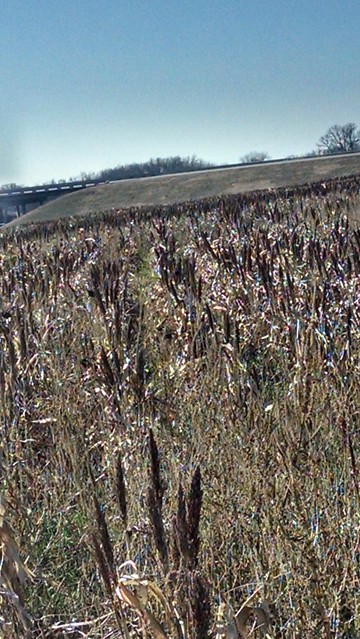
This field was the grazing blend that wasn’t grazed due to dry weather the prevented proper fall growth. I had switched from a yellow variety to a red sorghum variety. The weed control has been very good here. The rain and weather aligned with sorghum needs very well and it’s tough crop that is still suited for poor hill ground compared to corn.


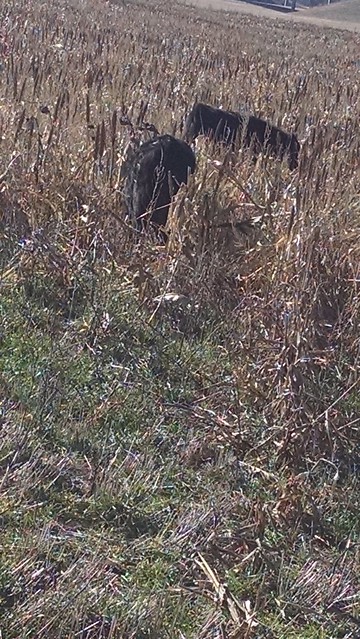
We had the same grazing blend here that was grazed. It was only grazed for about 3 weeks because it was dry and didn’t grow as expected. I also planted the covers about a notch shallower than I normally plant wheat I didn’t want to bury the radishes and turnips. I think I would have been better at the deeper seed depth. We have a little more weed pressure, not bad and the favorable weather we can grow good sorghum and weeds.


For comparison this sorghum was planted into wheat stubble that had double crop sunflowers last year, the sunflowers had done very good last year. We like the sunflowers as a double crop for many reasons. We can plant them as late as July 20th and make a crop, they are harvested high off the ground so our wheat stubble remains in tact on the field. Finally the tap root goes deep in the soil and extracts nutrients other crops can’t reach, the deep roots serve as a pathway for following crops to root deeper. It seems crops following for the next 3 or 4 years just do a little better. We have an irrigated field that has had a corn, soybean, wheat and double crop sunflower rotation for years. I’d love to have a soil pit on it some time, I imagine there is black streaks several feet deep  every few inches.

The corn is already harvested where we we have had cover crops. Very good weed suppression and it still has a nice mat of residue on the ground from both the wheat stubble and rye. The corn yields weren’t great due to hot dry weather at pollination. One field has been seeded back to wheat. The other field some of the corn was chopped for silage in early august and the rest was harvested for grain mid September. It has been seeded back to rye and planning to put soybeans on it next spring.

The cereals were sprayed out when they reached the boot stage so we shouldn’t have a problem with making seed and future plants becoming weeds. The plants were at max growth in regards to size and weren’t using nutrients and soil water to make seed yet.

We were a little leary of planting sorghum on the covers because there are little effective herbicide options for weed control after the crop starts growing and unsure of how well our normal pre plant residual herbicides would be with all the residue. We decided to use the pre plant due to thin places in the cover crops to prevent an explosion of weeds there. Corn is a better option because of better herbicide options even for non GMO varieties.

Here is a field planted to rye. It might get grazed later this fall if things work out for us to we used a basic stater fertilizer to help maintain the phosphorus level in the soil. There is another field, the dry land portion of the irrigatated corn, soybean, wheat, double crop sunflower field that has some rye on part of it. It will be interesting to see how and if soybeans respond to the rye cover crop. 

In the future I might experiment with winter legumes such as winter peas and chickling vertch on fields destined for corn or grain sorghum, I don’t think we will have the ground cover we have with cereal crops hindering soil water holding. A mix of them with cereal and turnips might work well. Another consideration is neighboring wheat fields, volunteer wheat can harbor mosaic and cause problems. If we know there is a will be a wheat field next to it, even across the road we plant later after controlling the volunteer wheat. Later planting limits the cover crop choices.


Wednesday, December 20, 2017

Erosion control

Many of our fields are on hills and have terraces to help prevent soil erosion from water runoff. The terraces are ridges that have been built in the field that to slow and redirect the water. The water moves to grass covered drainage ditches. It’s hard for me to explain but this past fall we had a very heavy rain event and I had the opportunity to take a group of pictures of terraces and waterways in use. This field had two years of wheat and is in currently in a rye cover crop so it was near maximum soil erosion protection. This part of this field might be rotated to corn for silage next year or soybeans due to more choices to control weeds after the crop starts growing.


Tuesday, December 22, 2015

Grazing cover crops

There has been quite a bit of discussion about cover crops and dual purpose cover/forage crops for the past few years. Some of the seed blends can get quite costly, I've seen quotes as high as $60 an acre for some seed mixes, this was the price of seed wheat during the height of the high grain price cycle.

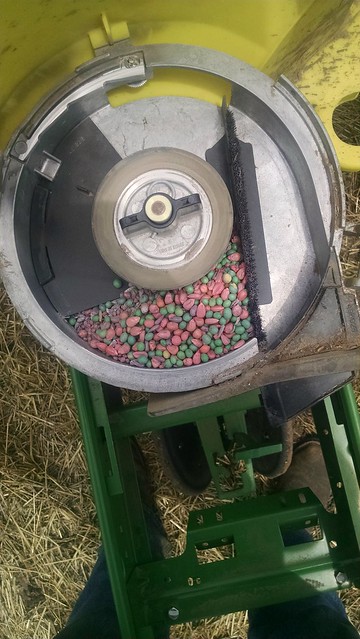
Since I still had sunflower seed in the planter boxes  I added some grain sorghum, corn, soybeans, and some more sunflower seed that was in the left over seed pile in the shop. All of this was seed that had been cleaned out of the planter so the cost of the seed was already paid for by the full season crop. This was planted on wheat stubble that was fallow until grain sorghum is planted next June, the seed was left over, part of the field was fertilized got the fertilizer that was left in the planter, so the only real expense was my time and wear and tear on the planter.

2015-12-21_12-14-50
The seed mix I planted. It's a mix of corn, soybeans, sunflowers, and grain sorghum. This is some seed that had been cleaned out of the planter the last couple of years.

I started with a seed population of 30,000 and decided to bump that to 40,000, for two reasons a, to see what it would do and b, I was getting tired of sitting in the tractor. I picked 30,000 because that is high for sunflowers, low for grain sorghum, high for corn, and extremely low for soybeans. I used the sunflower seed meter disk since they were the closest to medium size and played with the vacuum until I was satisfied with the seeding rate. I wasn't overly concerned with seeding accuracy due to the purpose of this crop.

I seeded this on July, 30th in a normal year nothing should have made it to full maturity. With the mild fall and late killing freeze the sunflowers did, but didn't retain seed and some shorter season corn did might of made it to physiological maturity. Both the sorghum and corn should have been high nutrient level in the plant at the time of a killing frost.

2015-12-20_11-55-01
Looking down the row, I ended up with more grain sorghum in the mix that I had originally planned. I didn't put any more bags in, but at about 15,000 seeds per pound when compared to the other seeds it makes sense.

I was surprised at the amount of volunteer wheat growing in it between the rows. Having it growing will extend the time that a root is actively growing. I feel root activity adds considerably to to soil health.

2015-12-20_11-55-41
Some calves grazing it. Those are sunflowers to the left of the calf in the foreground.

2015-12-20_11-54-10
To simplify the fencing I including part of the adjoining wheat field. Typically we don't pasture wheat, but it is an accepted practice for the area. The calves will be of before the wheat gets to the jointing stage this spring so there will be no permanent harm to the wheat.

I don't have access to scales to measure growth so I will track the amount of hay I feed compared to what I would have fed in a drylot. Normally we feed medium quality brome, priced at about $45 a bale.

In future years I will add a few turnips or radishes and Austrian winter peas. I think this will be an inexpensive way to add even more diversity. The turnips or radishes will have deep roots along with the sunflowers and will absorb nutrients and the peas will convert atmospheric nitrogen to usable nitrogen in the plant that will go into the soil after it decomposes. The peas might over winter, I haven't found a definitive answer, but even if they do it should be simple to kill out in the spring when I do spring burn down for the volunteer wheat.

Sunday, March 15, 2015

Tibbits Farms through the years 1912 to 1930s

We moved into my Granddad's house this past summer and among some of the things that came with the house was some of his parents belongings. One night my youngest son was quizzing me about combines and somehow the conversation turned towards combines without cabs. This brought a very curios look to his face. I remembered seeing a box marked photos, expecting to find photos from the 1950's to show him pictures of cabless combines. I was quite surprised to find pictures this old. I'm also very thankful that they took the time to label many of the pictures with the people in them, what they were doing and the year. Some of these pictures have made it on my twitter feed on throwback Thursdays.  As always these photos along with lots that haven't made it on the blog yet are on my Flickr account.

IMG_20150208_0002_NEW
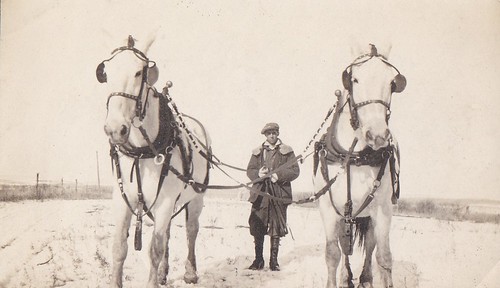
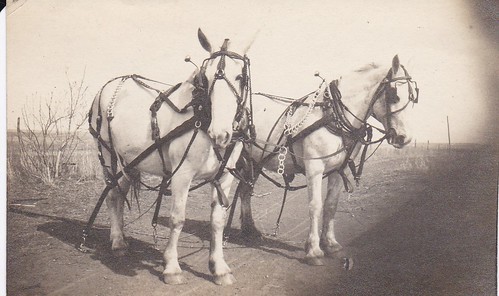
Maude and Nell, 1912. It's not wrote on the photo, but I assume that is my great granddad in the photo.

  IMG_20150208_0012
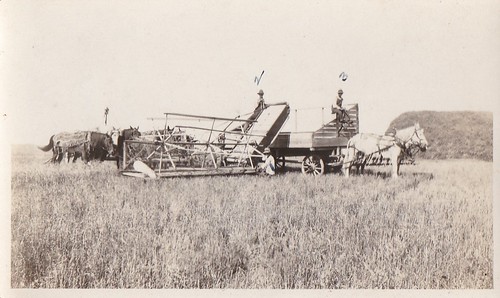
Maude and Nell again in 1912, new harness.

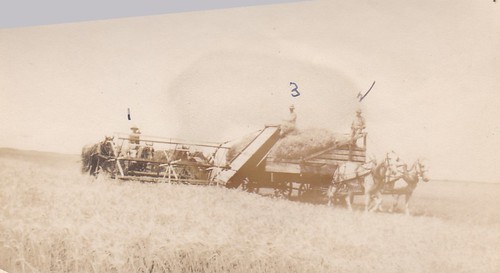
IMG_20150208_0001_NEW
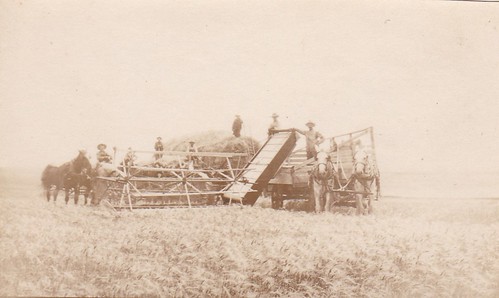
No year, but the people are labeled. 1 R. T. Tibbits, my great granddad, 2. H.R. Tibbits, my great-great grandfather, 3 Miller, I presume either hired help or neighbor that they traded labor with.

IMG_20150208_0004
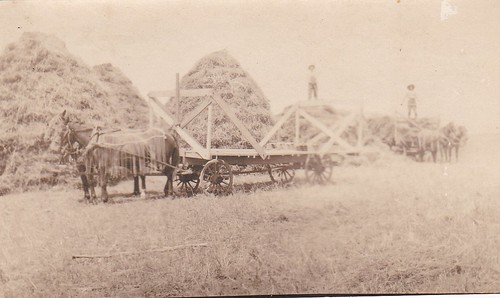
No names or dates were on this picture. It appears that it took quite a crew to harvest.

IMG_20150208_0014
Stacking bundle grain, no date.


IMG_20150208_0013
1. Fred Schur, the Schur family are long time neighbors, 2. George Tibbits, I think it is great-great granddads brother, 3. Herbert or H.R. Tibbits, great-great granddad.
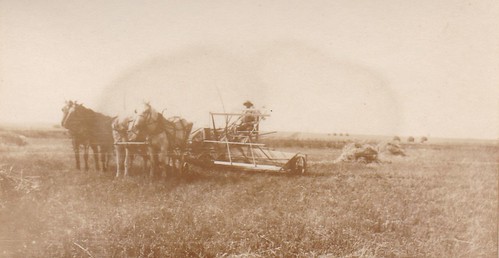


IMG_20150208_0017
No names or dates.


IMG_20150208_0022
Mabel Tibbits, my great grandma, 1923. It also has August 1923 wrote in pencil on the back of the picture, which is the month and year my granddad was born.
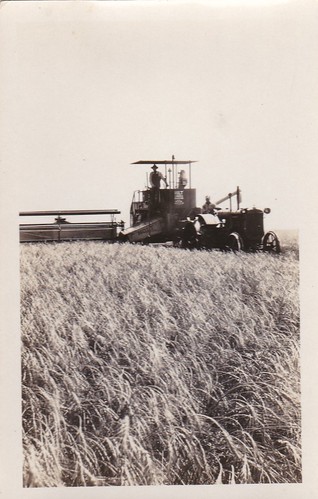

IMG_20150208_0008
All that is wrote on the picture is 1929. It looks like they were harvesting some really nice wheat that year.

IMG_20150208_0007
Fred Cline at the combine wheel, Riley T. sitting on the grain tank, Herbert standing on the truck, and Riley D. sitting on the truck bed. Three generations in the field, Herbert is my great-great granddad, Riley T. is my great granddad, and Riley D. is my granddad.
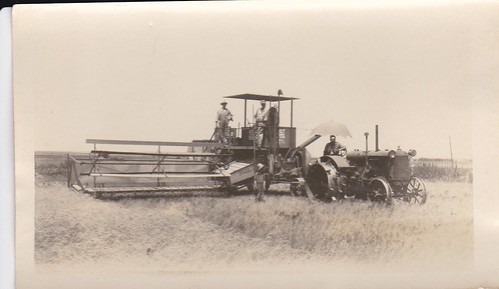

IMG_20150208_0018
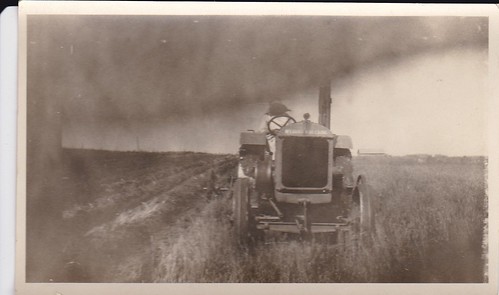
Fred Cline on the tractor, Riley D. on the ground, Riley T. at the combine's wheel, and Herbert standing on the platform.
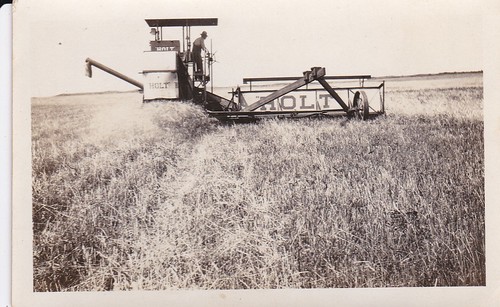
IMG_20150208_0015
Cy Austin, 1929. I don't remember how he is related to us, but it is a really good picture of the combine working.
IMG_20150208_0006
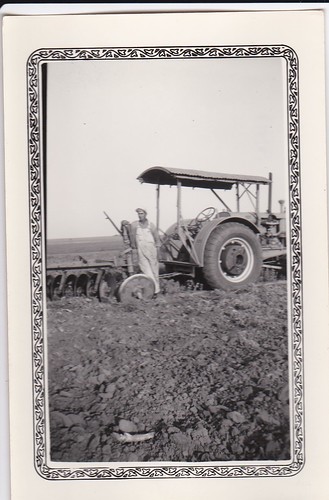
No name or date wrote down,

IMG_20150208_0005
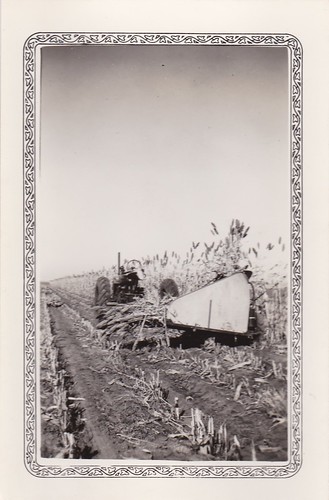
Cutting Atlas, 1941. Atlas was a predecessor to forage sorghum, I think they would take it back to the farm and chop it as silage and blow it into an upright silo to feed during the winter.
IMG_20150208_0021
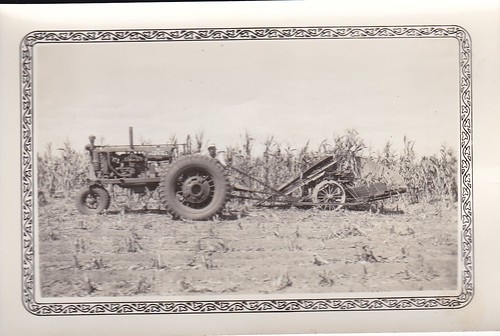
Riley T,, 1936. I think he might be cutting Atlas or corn.
IMG_20150208_0009
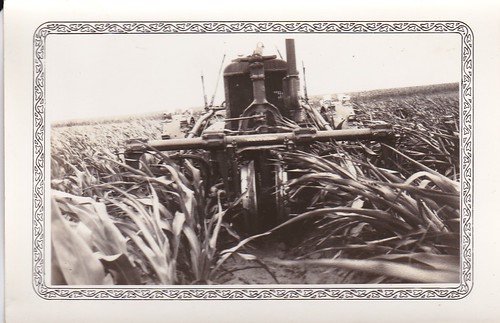
Farmall cultivating, 1936. Either Atlas or corn. Looks like the leaves might be curled some which can be cause by heat or drought stress.
IMG_20150208_0020
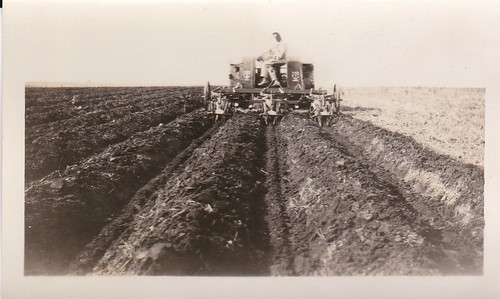
Listing corn, 1934. A lister pushes dirt out of the way and seed is planted in the bottom of the furrow, then the ridges will be knocked down when they cultivated.


IMG_20150208_0010
1935, It looks like they are listing I would guess corn.


IMG_20150208_0019
Herbert, drilling wheat 1936. He is using 2 12 hole and a 16 hole drill.

IMG_20150208_0024
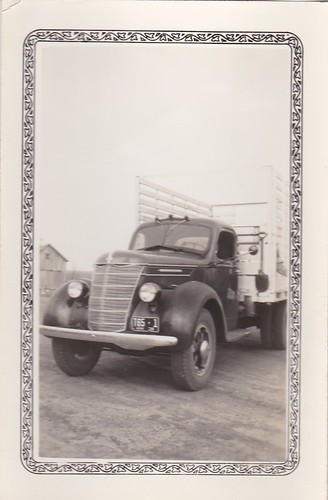
1937 D35 truck. The back of the picture says 1947, but the tag is a 38. The truck is gone, but the tag might be part of a collection.

IMG_20150208_0023
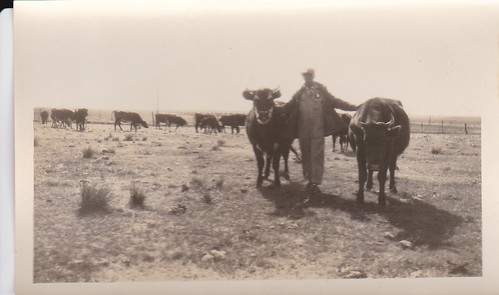
Pet heifers,1936.

These are all of the pictures I have scanned so far. There are more farm pictures from this time frame in the box.

I was looking through them thinking how neat it was to have them and then it struck me that many of them were from the Great Depression and dust bowl era. With that in mind some of these pictures will resurface along with some of the others in future blogs.

Tuesday, March 3, 2015

Where our corn is going

Normally our corn is sold to a cattle feedlot to be used as an ingredient in cattle feed. This year it is going to an ethanol plant. This is the first time that we have delivered to an ethanol plant, some of the corn and grain sorghum that we have delivered to elevators might have gone to ethanol.

Loading corn bound for an ethanol plant.
I posted this picture to twitter, @ksfarmboy, today while loading our semi for the drive to Russell, Kansas.

Our grain prices have changed greatly in our area the past year. Typically in my area corn is priced twenty cents a bushel, 56 pounds per bushel of both corn and grain sorghum, more than sorghum. China started importing sorghum last year and has been aggressively importing it this year. This has driven the sorghum price locally to a over a dollar a bushel over corn, making corn a natural alternative for sorghum in many Kansas ethanol plants and for other end users of sorghum in the area.
The corn is being delivered to White Energy in Russell Kansas. This ethanol plant is combined with a wheat gluten plant and share many resources. To learn more about it the plant.


Friday, June 6, 2014

Calf 27 update


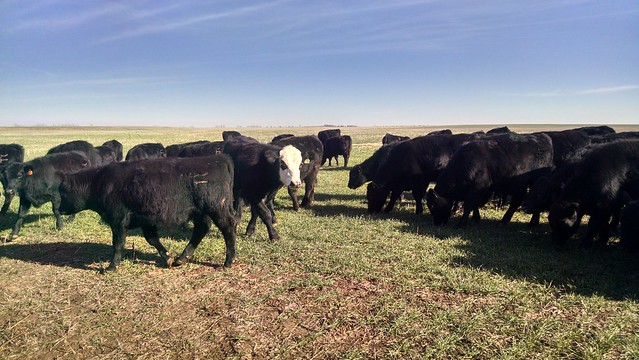
A group of cows and calves enjoying the shade. Calf 27 is the white faced calf to the far left.

We moved the cow calf pairs from the pasture they were born in this past week. Normally they would have been moved to summer pasture in mid May, but the calving pasture had sufficient grass to support them for longer so we concentrated on planting spring crops.

Just prior to moving the cow calf pairs to summer pasture they were vaccinated and the larger group had a bull turned out with them. Since we added more cows to the herd last winter and had two groups of cows we needed an additional bull. My son and I bought a young bull from Wolf Creek Angus Ranch, this son is more interested in the farm equipment but thinks it's cool to help select the bulls. Wolf Creek Angus is owned and operated by a couple that has been great at helping us select bulls that meets our needs in the past. Our needs and objectives are a little different than many because we will feed the calves at the farm until they reach optimum weight for the finishing phase of feeding where they will be fed for us at a feedlot. We need cattle that will gain efficiently on feed and have high quality meat that can qualify for premiums from packers. 

Even through we have been in a drought and this will be the worst wheat crop since 1989, seeding conditions this spring has been ideal. All the seed went into good soil moisture and warm soils that promote rapid seed emergence. We have all the corn, soybeans and sunflowers seeded and vigorously growing. Normally grain sorghum seeding would be starting, but we only have three fields left and with both of our planters operating they can be finished in a couple of days after the fields dry out. This past week we've received 2.5 inches of rain and another storm is just about here so those last fields will be seeded much later than the others.

Tuesday, March 18, 2014

The chronicles of calf 27

Author's note: this is the initial segment of following a calf from birth. As always these photos and many more are on my Flickr photo stream. 

I have been waiting until there was a calf born with very distinctive markings that can be easily tracked before posting about springing calving, calving is what it's called when a calf is born. When I saw that Bowtie had calved I was hoping she had another white face calf, Bowtie is an all black cow except for a small patch of white hair on her forehead shaped like a bowtie. She is not a pet, just a nice calm cow like the rest of them that won't run someone over if she thinks they even looking at her calf.

Calf 27
Calf 27's first visit to the corral, he couldn't have been much more than 2 or 3 hours old when I found him in the pasture. He followed Bowtie into the corral when I fed this evening.

feeding time
Calf 20, the one with the white on his face, was Bowtie's calf last year and a full brother to calf 27.

calf 20
This is a more recent picture of calf 20 at the cattle pens. He was one of the younger calves of the ones from our cows. We bought some calves from local farmers to feed with our calves. All of the calves will go to a custom cattle feedlot in a couple of weeks for the finishing phase.

Tall grass
This is an attempt to show how tall the grass is in the calving pasture. This happens to be a patch of Big Bluestem, our native grass pastures are very diverse in different plants. Most of the cows prefer to have their calves out here, but a few have calved in the corral.

Hiding out
A calf hiding in the tall grass, I just barely noticed it when driving by. I have trails that I drive on so I can see any calves laying where I drive.

Cow and calf
I saw this cow and her calf laying in the corral one morning when I went to check on them. They seemed so content sitting in the morning light. Her calf had been born the night before.

  Newborn calf 2
Cow 9 with her new born calf minutes after she had it. I was trying to get a picture of her standing, but she just couldn't yet.

There are 16 more cows yet to have their calves keep checking back for more adventures of calf 27 and his pasture mates.

Friday, February 7, 2014

Pictures of winter 2014

Sun Dog 1
My youngest son was helping me scoop snow out of the driveway when he asked me "Dad why are there three suns?" I looked up and told him that it was a Sun Dog and they are real rare to see them here. It's the first one that I have seen. I couldn't get all of it in the screen on my phone's camera.

snow on wheat stubble, 2/6/14
A field of wheat stubble, it did a good job of catching this last snow and will have a good start for grain sorghum or corn next spring.

Winter Turkeys
It's hard to make it out in the picture, but on the right hand side of the road is a turkey crossing it. It took about three tries to get a picture of one crossing the road from a field that was in grain sorghum last year.

Turkey stratchings.
Turkeys had been scratching and digging through the snow to get to find some grain sorghum in this field. Our spring calving cows are also in this field so I'm sure they're recycling whole grain out of the pats. It reminds me of a story old timers told of having a cow, pig and chickens in a corral. The cow was the only one that was fed and the pigs and chickens would scavenge what went through the cow. I would guess the pig got scraps from the house also.

Cow number 10
Cow number 10 posing for the camera while here "sisters" are eating hay. Even though they are being pastured on grain sorghum stubble I have made hay available for them. They have gotten about all they can from the stubble and will be moved to the calving pasture in the next week if all goes well. They are due to start calving the end of February they could start earlier since they were bred to a calving ease bull and that can have them calving a couple of weeks earlier.

These photos along with many others can be found on my flickr photostream.

Thursday, November 21, 2013

Harvest update 13

We wrapped up soybean harvest and wheat seeding the end of October and moved on to corn and then grain sorghum harvest.

There were some mechanical setbacks with harvest, a nagging problems with a header during soybean harvest, the header is the front part that cuts the plant and brings them into the combine. I was seeding wheat, but they told me they usually had it repaired by the time of day that the soybeans were ready for harvest, most crops will take on moisture from dew or frost overnnight and will not harvest properly until late morning.

The combine we use for corn had a couple of major components fail that took quite a bit of time to repair. After that corn harvest was smooth sailing.

I tried harvesting grain sorghum while the rest of the crew harvested corn, but was only able to do a about a hundred acres due to high moisture content of the grain and having to utilize a couple of grain bins that have huge fans that can dry the grain to acceptable levels for storage.

I shifted my attention to helping with corn harvest since we were storing the rest of the crop on the farm for winter and spring delivery to cattle feedlots and feed mills. Our irrigated corn is very high quality that cattle feeders and feed mills recognize and will possibly pay premium. Also my area uses more corn than is raised locally.

The last field of corn harvested was one that was planted to drought tolerant hybrids on a field that has a slightly limited irrigation water available and considerable variation in soils, this can make getting enough water in the soil for the crop challenging particularly in hot dry and weather periods. Half of the field was planted to seed from Pioneer/DuPont gene marker assisted breeding and the other half utilized Monsanto's drought tolerant bio tech trait. The whole field averaged 170 bushel an acre which is very good for it. I was very pleased considering the non irrigated portion was planted with the same seeding and fertilizer rate as the irrigated part, ideally the non irrigation portion would be planted with 6,000 less seeds an acre and save a 1/4 or more on fertilizer.

irrigated corn in a pasture?
This is the field that was planted to the drought tolerant corn, it's along a creek with native pastures on all 4 sides. In the foreground is some of the native plants that are common on our virgin prairie.


Dryland corn
This is some of the dryland corn on that field, this happens to be from the Pioneer seed. The ears were smaller than the DeKalb corn, but very uniform and every plant had an ear except for what the deer ate.

Untitled
This is an ear of corn from the DeKalb seed on the dryland. It had kernels set on 20 rows, I've only seen a few ears of corn that was 20 row in my entire lif

After we finished corn that afternoon I cut a test sample of grain sorghum. I had heard from neighbors and elevator employees that they hadn't been any below 17% moisture. I was surprised the sample was 15.6% moisture, so I went back and cut a semi load, that load was 15.3% moisture and has been the highest moisture since then. Grain sorghum over 15% is discounted and higher moisture levels get discounted at higher rates. The yield has been very goood and test weights higher than I expected considering the cool spell during August, the truck drivers have reported test weights up to 62 pounds a bushel, the standard is 56 pounds a bushel. Plants have gone down in places in fields, this is another problem we face with growing it. I tried a new sorghum from Pioneer/DuPont and was very pleased with it, generally there isn't new sorghum seed released so getting a new hybrid to plant is exciting.

I feel we are moving into a more normal weather pattern and with my limited experience with drought tolerant corn it will be a viable option than grain sorghum and will allow me to better maximize my labor. Many times dryland corn is ready for harvest during a slow time in September between irrigation and the beginning of wheat seeding and soybean harvest when we have more hours of daylight. I've gotten lucky this year with sorghum drying down in the field as it has, normally it won't we have to take the discounts. Freeing up time and labor now would allow time to expand our cattle enterprise and to be more timely with the management. 

On of my seed dealers that also farms has experimented with planting corn lato, I assume mid June. He left a portion of a sorghum field and then planted corn. I think this is the second or third year of experimenting with this and was very successful this year. He mentioned that he might try late planting corn on one of his better dryland fields. The reason for the experiment was to try to time the corn's water needs to the typical rain pattern of August, these are the rains that help our sorghum produce the yields it does.